The Mashup Nobody Asked For But Everyone Needed
You’re halfway through a K-Drama. The love interest just did the thing. And all you can think about besides whether he’ll actually say it back is that steaming bowl of noodles the lead actress is slurping in the street food scene. Yeah. That one.
K-Drama food moments have officially broken the internet, and they’ve dragged the rest of us straight into the kitchen. But here’s the twist nobody saw coming: what if we took that fiery Korean flavor obsession and crashed it straight into one of Thailand’s most beloved street food classics Pad Thai?
Welcome to the most delicious identity crisis your noodle bowl has ever had.
Why This Recipe Is a Lifesaver (Seriously)
Let’s be real. Between back-to-back meetings, inbox overload, and the eternal question of “what’s for dinner?” Most of us don’t have an hour to spend hovering over a stove.
That’s exactly why this spicy Korean Pad Thai is about to become your new weeknight hero. We’re talking 20-minute fusion noodles from pan to plate, with zero fuss and maximum flavour payoff.
This isn’t the kind of recipe that demands a culinary degree or a pantry stocked with twelve obscure ingredients. It’s designed for the busy professional who still wants to eat well, not just eat fast.
These easy Pad Thai for beginners steps are stripped back, foolproof, and genuinely satisfying. You don’t need to be a chef. You just need a wok, a little confidence, and about twenty minutes of your evening.
And the best part? People will think you put way more time into it than you actually did.
What to Expect From This Recipe
Before we dive into the full guide, here’s a quick snapshot of what’s waiting for you:
- Cook Time: 20 minutes, start to finish no soaking, no fuss
- Spice Level: Medium-hot, with easy ways to dial it up or down
- Texture: Silky noodles with a satisfying crunch from crushed peanuts and bean sprouts
- Sauce Profile: A bold, tangy, umami-rich blend of Gochujang, tamarind, and fish sauce
- Serving Size: Easily scales from 2 to 4 servings with minimal extra effort
- Skill Level: Beginner-friendly seriously, if you can boil water, you can nail this
- Make-Ahead Friendly: The sauce can be prepped days in advance for even faster weeknight cooking
Whether you’re chasing that K-Drama kitchen moment or just desperately need a weeknight dinner that doesn’t come from a drive-through you’re in the right place. Let’s get into it.
The Holy Grail of Fusion Sauces
Let’s talk about the sauce. Because in this recipe, the sauce isn’t just a supporting character it’s the lead.
Traditional Pad Thai leans on tamarind for its signature tangy backbone. It’s sour, fruity, and just a little bit funky in the best way. Korean cuisine, on the other hand, brings Gochujang to the table, a fermented chili paste that’s smoky, subtly sweet, and layered with a depth that builds slowly on your palate.
Put them together? Magic.
Here’s the chemistry at play. Tamarind paste carries organic acids tartaric and citric that brighten and cut through richness. Gochujang brings fermented sugars and capsaicins that add heat and complexity. When you whisk them together with a touch of palm sugar and a splash of fish sauce, the acids and sugars balance each other out in a way that feels almost engineered. Tangy meets smoky. Sweet meets spicy. It’s the kind of sweet and spicy Korean noodle sauce that you’ll want to put on literally everything.
This is what turns a simple stir-fry into something you’ll genuinely crave again.
The Ingredient Lineup
No drama. No mystery. Here’s exactly what you need broken down so cleanly, even your grocery list will thank you.
Noodles
- 250g dried rice noodles (flat, 3–5mm width the classic Pad Thai cut)
- 1 tsp sesame oil (for tossing once drained, to prevent sticking)
Proteins
- 200g prawns, peeled and deveined (or see substitutions below)
- 150g firm tofu, pressed and cubed
- 2 large eggs
Aromatics & Vegetables
- 4 cloves garlic, minced
- 1 small shallot, finely sliced
- 1 cup bean sprouts
- 2 spring onions, sliced on the diagonal
- 1 small red chilli, sliced (optional, for heat)
- Fresh cilantro, for garnish
The Sauce
- 2 tbsp Gochujang paste
- 1.5 tbsp tamarind paste (or 2 tbsp tamarind concentrate check the label)
- 1 tbsp palm sugar (or light brown sugar as a swap)
- 1 tbsp fish sauce
- 1 tsp sesame oil
- 1 tsp rice vinegar
- 2 tbsp water (to loosen)
Toppings
- ¼ cup roasted peanuts, roughly crushed
- Lime wedges, to serve
- Dried chilli flakes (to taste)
Scaling the Recipe: Cook for 1 or Feed a Crowd
This recipe is built for 2–3 servings as written. But life doesn’t always come in perfect portion sizes. Here’s exactly how to scale up or down without doing math in your head while standing over a hot wok.
| Servings | Rice Noodles | Prawns | Tofu | Eggs | Sauce (all ingredients) | Cook Time | |—|—|—|—|—| | 1 person | 125g | 100g | 75g | 1 large | Half the amounts | 15 min | | 2–3 (base) | 250g | 200g | 150g | 2 large | As written | 20 min | | 4–5 | 375g | 300g | 225g | 3 large | 1.5x the amounts | 25 min | | 6+ | 500g | 400g | 300g | 4 large | Double the amounts | 30 min (cook in batches) |
Critical note for feeding 6+: Your wok isn’t big enough to hold everything at once without overcrowding. Cook the noodles in two batches. Divide your prepped ingredients in half, cook batch 1 completely (Steps 1–6), plate it and keep it warm, then repeat with batch 2. Trying to cram 500g of noodles into a single wok will turn this into a steamed, soggy mess not a proper stir-fry.
Substitution Table
Dietary restrictions shouldn’t shut you out of a great bowl. Here’s how to make this Gochujang Pad Thai recipe work for every eater at your table.
| Dietary Need | Swap It Out | Swap It In |
| Vegan | Prawns, eggs, fish sauce | Extra firm tofu (pan-fried crispy), 1 flax egg (1 tbsp ground flax + 3 tbsp water), soy sauce or coconut aminos |
| Gluten-Free | Fish sauce (some brands contain wheat) | Tamari or certified GF fish sauce always check the label |
| Nut-Free | Crushed peanuts | Toasted sunflower seeds or pumpkin seeds same crunch, zero nuts |
Quick note on the Gochujang: most brands are naturally gluten-free, but a handful are not. If you’re cooking for someone with coeliac disease or a serious gluten sensitivity, scan that ingredient list before you open the jar.
How to Store Leftover Gochujang (Don’t Waste That $7 Tub)
You just used 2 tablespoons. The tub has about 15 servings left. Here’s how to make sure you actually use it before it grows mold in the back of your fridge.
Storage: If the original packaging isn’t resealable, transfer the gochujang to an airtight container. Store in the fridge. It lasts 6–12 months easily the fermentation and salt content make it nearly indestructible.
Pro move: Portion it out into ice cube trays (about 1 tablespoon per cube), freeze overnight, then pop the cubes into a freezer bag. Now you have pre-measured gochujang cubes ready to drop straight into any dish, and they’ll keep in the freezer for up to a year.
5 ways to actually use it:
- Stir it into mayo (1:3 ratio) for an instant spicy sandwich spread or burger sauce
- Mix with butter (2 tbsp Gochujang + 4 tbsp softened butter) and slather on grilled corn, roasted vegetables, or garlic bread
- Add a spoonful to scrambled eggs it’s absurdly good
- Whisk into salad dressing with sesame oil, rice vinegar, and honey
- Use as a marinade base for chicken thighs, pork chops, or tofu mix with soy sauce and a little brown sugar
This paste is a cheat code for flavour. Don’t let it die in your fridge.
Prep-Ahead: The Secret Behind the “Quick”
Here’s the honest truth about Korean style stir-fry rice noodles the cooking itself takes about five minutes. It’s everything around the cooking that eats up your time.
So let’s fix that.
The night before (or even 2–3 days ahead):
Whisk together the entire sauce of Gochujang, tamarind, palm sugar, fish sauce, sesame oil, rice vinegar, and water. Taste it. Adjust. Jar it. Fridge it. Done. The flavours actually deepen overnight as everything melds together.
30 minutes before you cook:
Soak your rice noodles in room-temperature water. They don’t need boiling, just a gentle soak until they’re pliable but still have a little bite. Drain, toss with 1 teaspoon of sesame oil, and set aside.
Right before you hit the wok:
Have everything chopped, peeled, and within arm’s reach. Garlic. Shallot. Prawns. Eggs cracked into a bowl. Bean sprouts rinsed. This is your mise en place moment and it’s the single thing that separates a stressful stir-fry from a smooth, 20-minute weeknight win.
Once that wok is screaming hot and everything is prepped? You’ll be plating up before you even know it.
The Cooking Masterclass: Step-by-Step
Sauce prepped. Noodles soaked. Everything within arm’s reach. The wok is calling.
This is where it moves fast. Stir-frying is a sprint. Read through every step once before you light that burner. Then go.
Step 1: Get Your Wok Screaming Hot
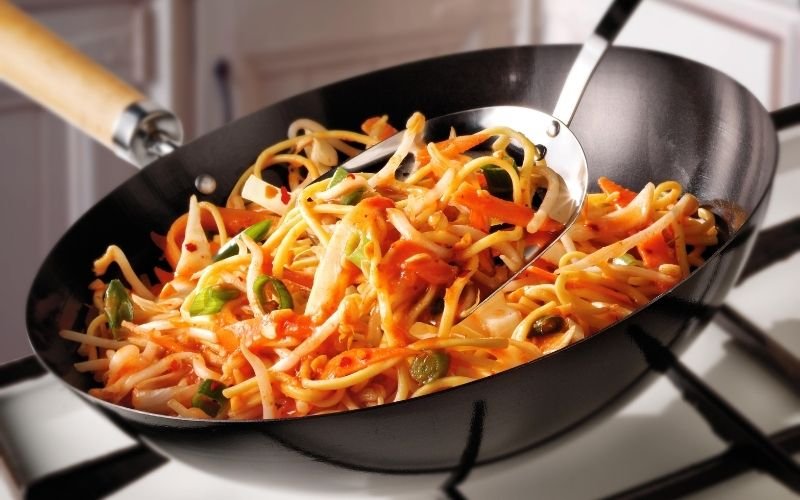
Place your wok over the highest heat your stove offers. Let it sit for 1–2 minutes. Add 1 tbsp high smoke point oil avocado or vegetable. Swirl to coat.
Why this matters: A lukewarm wok steams instead of searing. It’s the difference between a proper quick Korean noodle stir fry and a mushy pan of regret.
Step 2: Cook the Prawns Then Remove Them
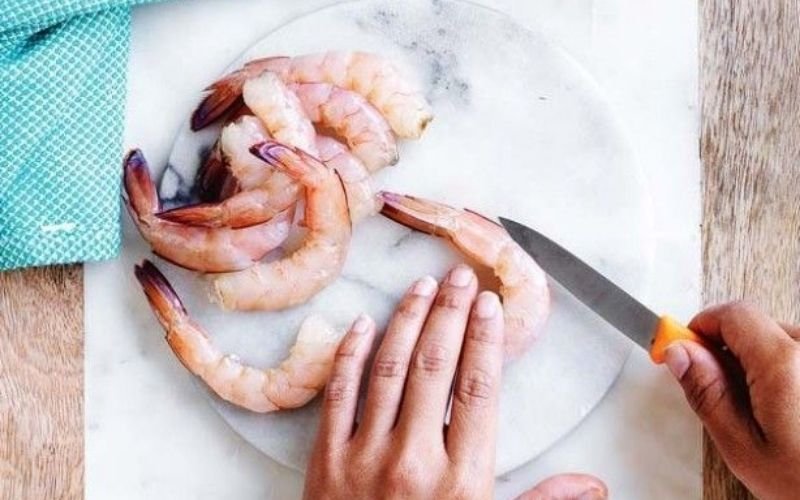
Add prawns in a single layer. Cook 1–1.5 minutes per side just until pink and curled into a tight C-shape. Pull them out immediately. They’re coming back later.
Why this matters: Prawns go from juicy to rubbery in seconds. Removing them early and finishing them at the end keeps the texture flawless without costing you a minute.
Step 3: Build the Aromatic Base
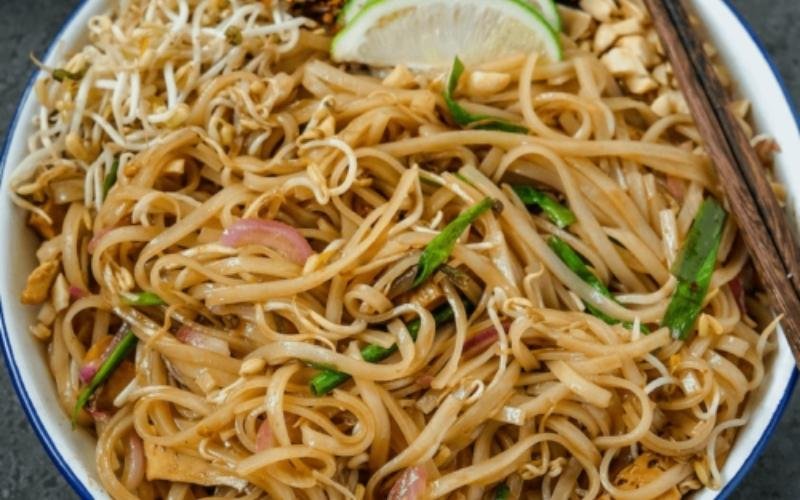
Toss in garlic and shallot. Stir constantly for 30 seconds until fragrant. Don’t walk away. Garlic burns in under a minute.
Why this matters: This 30-second window is where the flavour foundation gets set. Aromatics in hot oil release compounds that coat every noodle. Skip it, and the dish tastes flat.
Multi-task moment: While the aromatics cook, give your drained noodles a final toss with sesame oil. They need to be loose and ready.
Step 4: Fry the Tofu Until It’s Actually Good
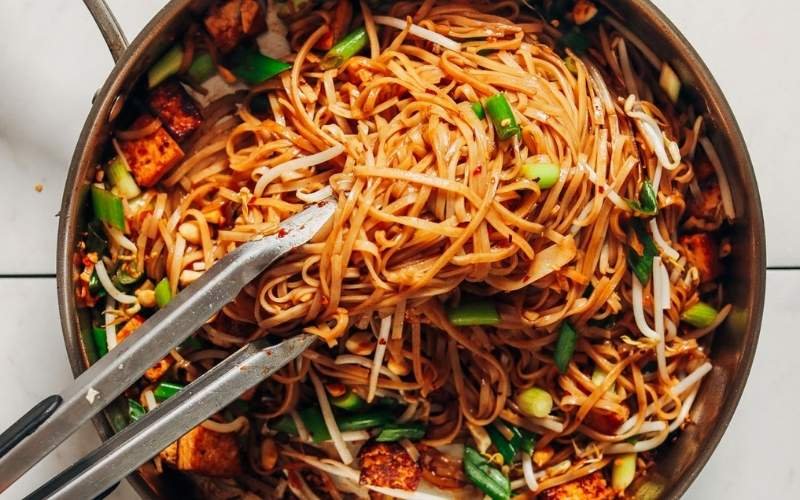
Push aromatics to the edge. Add tofu in a single layer. Let it sit completely untouched for 45 seconds until the bottom is golden. Flip. Repeat on one more side.
Why this matters: Tofu gets its bad reputation from being moved too much. Let it sit undisturbed against screaming heat, and you get a proper crispy crust. Move it constantly, and you get crumbly mush.
Step 5: Noodles, Sauce, Eggs In That Exact Order
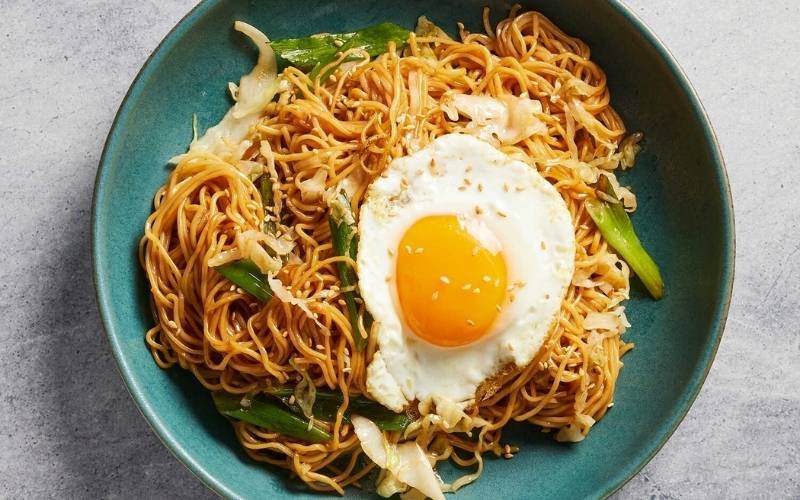
Add drained noodles. Pour sauce over them. Toss with tongs until coated. Cook 1–2 minutes, tossing constantly, until they glisten.
Push noodles to one side. Crack eggs into the empty space. Scramble just until set still slightly wet. Fold straight into the noodles.
Why this matters: Noodles need the longest to drink up the sauce. Eggs cook in seconds and should stay soft and custardy. This order is the single thing that stops the whole dish from becoming an overcooked, sticky mess.
Multi-task moment: While noodles absorb the sauce, slice spring onions and crush peanuts. Plating is about to happen fast.
Step 6: The Grand Finale
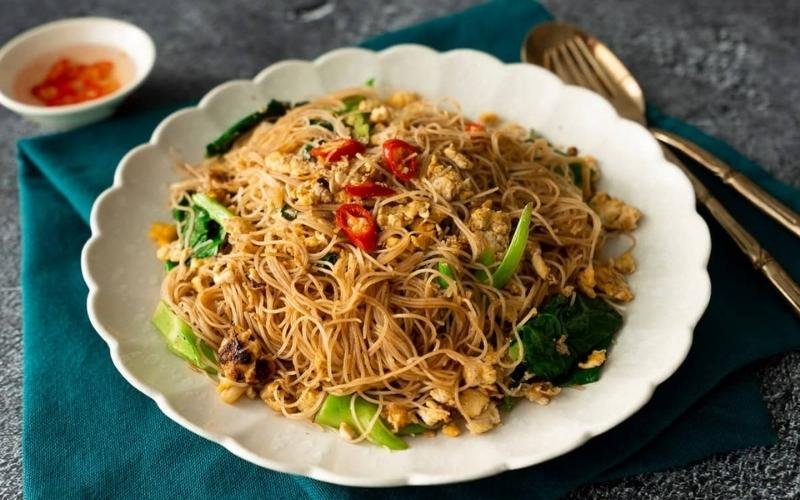
Return the prawns. Add bean sprouts. Toss for exactly 20–30 seconds. Kill the heat. Fold in spring onions and cilantro. Plate immediately top with crushed peanuts, lime, and chilli flakes.
Why this matters: Bean sprouts are 95% water. Over-cook them and your crispy noodle dish turns into a soupy puddle. Twenty seconds of residual heat is genuinely all they need.
Common Mistakes to Avoid
Five blunders that turn a great bowl into a disappointing one and exactly how to sidestep each one.
- Clumping noodles. Soaked noodles stick together the second they sit in a pile. Fix: Toss them with sesame oil the moment you drain them. They should hit the wok loose never in a sticky ball.
- Overcooking the prawns. They cross the line from perfect to chewy in about 15 seconds. Fix: Pull them the instant they turn pink. Residual heat finishes them when they go back in at the end.
- Burning the garlic. The margin between “fragrant” and “bitter” is almost nothing. Fix: Have your next ingredient prepped and ready before the garlic even hits the pan.
- Drowning the dish in sauce. More sauce feels like more flavour, but it just makes noodles soggy. Fix: Stick to the recipe amounts. A squeeze of lime or pinch of chilli at the end adds punch without extra volume.
- Playing it safe with the heat. Medium flame is why your noodles taste steamed, not stir-fried. Fix: Use the highest heat your stove will give you. It’ll smoke. Open a window. It’s worth it.
Expert Variations: Make It Your Own
Nailed the base recipe? Now let’s get creative.
This dish is a one-pan Korean Pad Thai at its core which means it’s a forgiving canvas for experimentation. The sauce holds, the technique stays the same, and the swaps below cost you zero extra effort.
The Kimchi Twist
After Step 5 once your noodles and eggs are folded push everything to the side and add ¾ cup of drained, chopped kimchi to the hot wok. Let it sit for 20 seconds. You want it warmed and slightly caramelised, not cooked down. Fold it in right before plating.
The kimchi brings a tangy, probiotic bite that balances the sweetness of the gochujang. It also nudges this firmly into healthier Pad Thai alternatives territory fermented vegetables doing serious gut-health work, disguised as something delicious.
The Creamy Twist
Whisk 2 tablespoons of coconut cream into your sauce before cooking. That’s the entire modification. The coconut cream rounds out the heat, adds a velvety mouthfeel, and makes this an even more convincing budget-friendly fusion dinner. Coconut cream is cheap, stretches the sauce, and turns a weeknight bowl into something that genuinely feels restaurant-worthy.
Final Thoughts
This recipe was built for the nights when you’re tired but still want to eat something good. It was built for the curious home cook who wants to play with flavours without spending all evening in the kitchen. And it was built to prove that fusion cooking doesn’t have to be complicated it just has to taste incredible. So go make it. Make your version. Throw in the kimchi, add the coconut cream, go full chaos. And when you do drop your twist in the comments below, tag us on social media with #TheForskyFusion, and show us what your bowl looks like. This is your recipe now.
FAQ: Everything You Were Afraid to Ask
Can ramen noodles be used in place of rice noodles?
You absolutely can, and it works surprisingly well for a quick weeknight swap. Fresh or dried ramen noodles have a springier, chewier texture than rice noodles which changes the vibe slightly, but not in a bad way. The main thing to watch: ramen cooks much faster. Add it to the wok for no more than 30–45 seconds before tossing with the sauce, or it’ll turn mushy and clump. Going the ramen route also makes this an even faster cook we’re talking 15 minutes from start to finish.
What’s the proper way to store leftovers, and how long do they last?
Let the noodles cool fully, then transfer to an airtight container. Refrigerate for up to 3 days. Fair warning: rice noodles firm up and stick together overnight. When you reheat, add a tablespoon of water to the container before microwaving, or toss them back in a hot wok with a drizzle of oil. They won’t be quite as silky as day one, but they’ll still taste great. Avoid freezing rice noodles don’t survive the thaw gracefully.
Is Gochujang too spicy for me?
Almost certainly not. Despite its reputation, Gochujang is actually one of the mildest chili pastes around. Most of its flavour is sweet and smoky the heat is gentle and builds slowly. In this recipe, it’s also balanced by tamarind, palm sugar, and coconut cream (if you’re doing the creamy twist), which all soften it further. If you’re still nervous, start with 1 tablespoon instead of 2. Taste the sauce before it hits the wok. You can always add more, but you can’t take any back.
